
ABSTRACT · 摘要
Driven by advances in artificial intelligence, we are entering an era defined by intelligence: interfaces can now learn user behavior, anticipate needs, and proactively offer services. This article introduces two mutually reinforcing technologies — predictive design, which uses AI to analyze user data and design interfaces around predicted behavior, and platform-level AI, which embeds AI into the operating system so it can deliver consistent intelligent services across apps and devices. Through two real-world cases — Honor MagicOS with its Magic Portal and Magic Capsule, and Apple Intelligence with its Ferret-UI multimodal model — it shows how AI is reshaping user experience.
KEYWORDS · 关键词
Propelled by progress in artificial intelligence, we are rapidly entering a new era characterized by intelligence. AI has not only changed how we live — it has vastly expanded how we interact with the digital world. Integrated AI allows user interfaces to learn behavioral patterns, anticipate needs, and proactively deliver services, producing smoother, more intuitive user experiences.
Predictive design uses AI algorithms to analyze user data, forecast behavior, and shape interfaces accordingly; platform-level AI embeds AI into the operating system or platform layer so it can serve consistent intelligence across apps and devices. Together, they open new possibilities for user experience. This article first introduces the two concepts and their technical composition, then examines two real cases — Honor MagicOS and Apple Intelligence — to show how AI tangibly improves UX.
01Predictive Design: Interfaces One Step Ahead
Predictive design is an innovative design philosophy: by deeply integrating AI, machine learning, and user-data analysis, it anticipates user needs and behavioral patterns, yielding highly personalized and efficient experiences. It demands that designers not only understand user behavior deeply but also wield AI techniques skillfully to act on it.
Predictive design plays a central role in improving UX: personalized services built on deep learning of preferences and behavior; greater efficiency by anticipating needs and cutting steps to reach information or features; error prevention by guiding users around pitfalls in advance; and stronger engagement through timely, relevant services that raise satisfaction.
Picture a concrete scenario: you are about to board public transit and need to show your ride code. The conventional flow is unlock phone, open the app, then open the QR code. With predictive design, the phone’s gyroscope and accelerometer recognize your motion and context, infer that you are entering a station, and surface the ride code automatically — the whole flow collapses into a single act: taking out your phone.
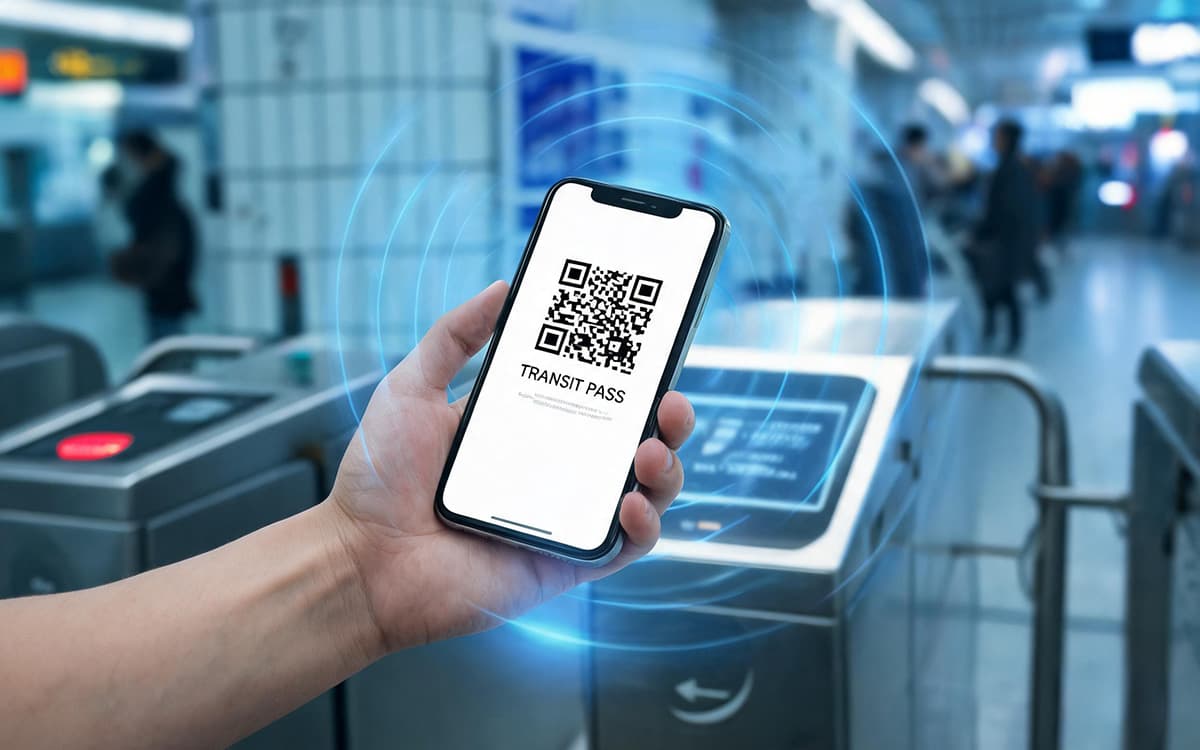
The best interaction is the one completed before the user asks.
02The Technology: Five Stages from Data to Interface
Technically, the core of predictive design is machine learning and data analysis. Its key components: comprehensive data collection of user interactions; user profiling built from that data; pattern recognition via machine-learning algorithms; a prediction model constructed from recognized patterns; and an adaptive interface that adjusts itself to the predictions.
Implementing predictive design requires cross-disciplinary expertise — psychology, cognitive science, data science, and HCI. Close collaboration between designers and developers is essential to building intelligent interfaces that genuinely understand and anticipate users. As the technology advances, predictive design will keep improving, delivering ever richer and more precise personalization.
03Platform-Level AI: Intelligence in the System Layer
Platform-level AI integrates deeply with the operating system and hardware platform, delivering an entirely new experience. Its key traits: cross-device cooperation, cross-app collaboration, understanding of user behavior and environmental context, automated task execution, and personalized experiences — together giving users a seamless experience on every device.
Automation reduces steps and raises efficiency; recommendation systems built on behavior and preference bring relevant content closer. And by processing data on the local device, platform-level AI strengthens security and privacy, keeping user information safer.
Platform-level AI is rapidly spreading across domains. On smartphones, the OS uses it for intelligent assistants, face recognition, and voice control. Smart-home platforms automate device control and energy management. Enterprise solutions optimize resource allocation and operations with intelligent decision support. And in-vehicle systems give drivers voice control, navigation suggestions, and driving assistance — improving safety and comfort.
AI no longer lives inside a single app — it sinks into the OS, orchestrating tasks across apps and devices.
So much for the concepts. Now let us look at two real products — Honor MagicOS and Apple Intelligence — to see how these technologies are applied and experienced today.
04Case One: Honor MagicOS and the Magic Portal
Honor breaks the boundaries between devices, building a smart ecosystem that works seamlessly together. Its MagicOS deeply integrates platform-level AI, offering smart scene recognition, task handoff, personalized recommendations, and natural-language interaction — a consistent experience across every device.
4.1Magic Portal: Drag Is Intent
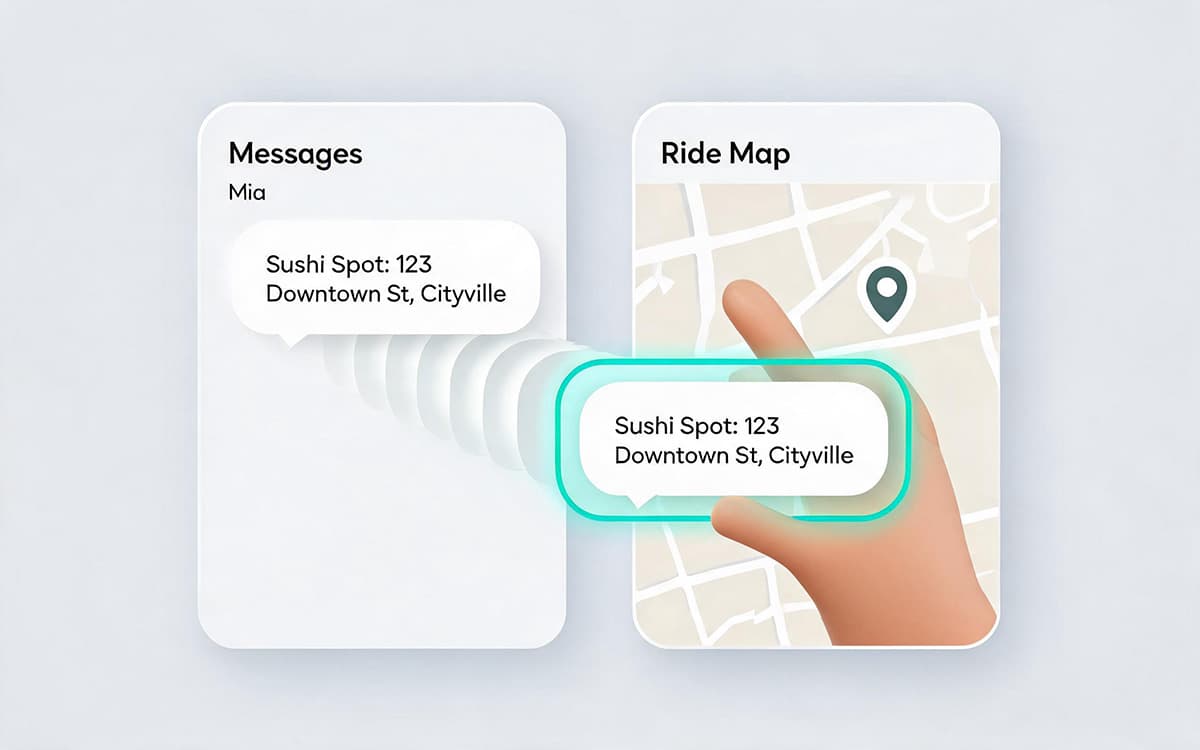
The Magic Portal feature in MagicOS 8.0 — built on the Magic Live platform-level AI, a multimodal intent-recognition engine, and an intent-analysis decision platform — enables direct app-to-app interaction. Say a friend sends you a restaurant address on WeChat for a dinner meetup: previously you would either type it from memory into Didi, or copy it in WeChat and paste it over. With Magic Portal, you simply drag the address from WeChat into Didi. Or while browsing Xiaohongshu you spot a product you like — no need to open Taobao to search the name, or save the image for an image search; just press and drag the picture into Taobao.
4.2Magic Capsule and Always On AI
MagicOS also introduced the Magic Capsule, which surfaces service information without interrupting the current task, making alerts more timely. When tapping is inconvenient, simply gazing at the live notification opens the app. Predictive design plus platform-level AI gives ordinary users a taste of “telekinetic operation.” Honor’s vision is an Always On AI — low-power, cross-device AI capability that makes interface design smarter and more personal.
05Case Two: Apple Intelligence and Ferret-UI
At WWDC 2024, Apple unveiled Apple Intelligence. It is not merely a bundle of AI features but a capability woven through iOS, iPadOS, watchOS, and macOS. Apple Intelligence can understand and interact with the UI across devices, letting operations move seamlessly among iPhone, iPad, and Mac for a consistent cross-device experience.
5.1Ferret-UI: Teaching AI to Read Screens
This cross-platform UI understanding rests on Apple’s multimodal large language model, Ferret-UI. It has three main capabilities: referring and grounding — understanding and referencing specific on-screen elements such as icons and text; advanced reasoning — detailed description, perceptual and interactive dialogue, and function inference; and open-ended instruction execution — carrying out free-form user instructions based on its reading of the screen.
Compared with other models, Ferret-UI strengthens recognition of small visual targets — icons, buttons, text — regardless of screen size or aspect ratio, and it understands the relationship between screen changes and the outcomes of user actions. That support lets AI see what task a user is performing, learn from their behavior, and eventually execute tasks automatically.
5.2Cross-App Task Collaboration
Apple Intelligence lets different apps complete the same task together, in cooperation. In the past, voice-controlling an app depended entirely on that app’s own capabilities — not every app supported voice, and “voice control” often meant little more than speech-to-text or basic commands. With Ferret-UI inside Apple Intelligence, Siri can operate any app. A usage scenario looks like this:
“Hey Siri, book me a hotel in Sanya for this Saturday, one night, rated 4.8 or above — check Xiaohongshu for popular picks. Sea view if possible, close to the airport, under 800 a night, note a non-smoking quiet room, and pay at checkout.”
Siri, through Apple Intelligence, interacts with the apps and completes the booking automatically — the most intuitive leap in user experience that predictive design combined with platform-level AI can offer.
06Epilogue: Understand, Predict, Across Apps and Platforms
Whether MagicOS or Apple Intelligence, the greatest change AI brings users is this: understanding and predicting user behavior, and executing instructions across apps and platforms. As AI advances, more processing will happen on-device, reducing latency and strengthening privacy; platforms will grow more personal and adaptive, adjusting intelligently to user behavior. For designers, the object of interface design is shifting from “an interface that responds to input” to “a partner that anticipates intent” — both a challenge and the new frontier of experience design.
REFERENCES · 参考与引用
- [1]SAP — What is artificial intelligence?
- [2]Synced — AI as the core: Honor’s MagicOS aims to be the third pole of phone systems
- [3]Tencent News — Honor CEO Zhao Ming: building platform-level AI so devices understand you
- [4]UISDC — A deep dive into Meizu’s in-car system FlymeAuto
- [5]UISDC — Apple Intelligence: redefining the AI interaction experience
- [6]Ferret-UI paper (arXiv:2404.05719)
- [7]Xue Zhirong — A Technical Book for Designers: From Smart Terminals to Perceptual Interaction, Tsinghua University Press, 2023