
Industry
Industrial Design / Home Product
Role
Industrial Designer

TIME AS A PRODUCT NARRATIVE
Make a wall clock mark the act of moving forward
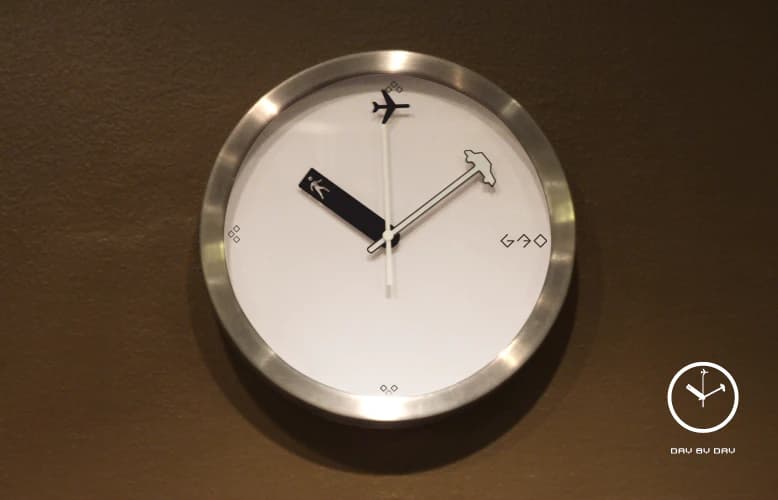
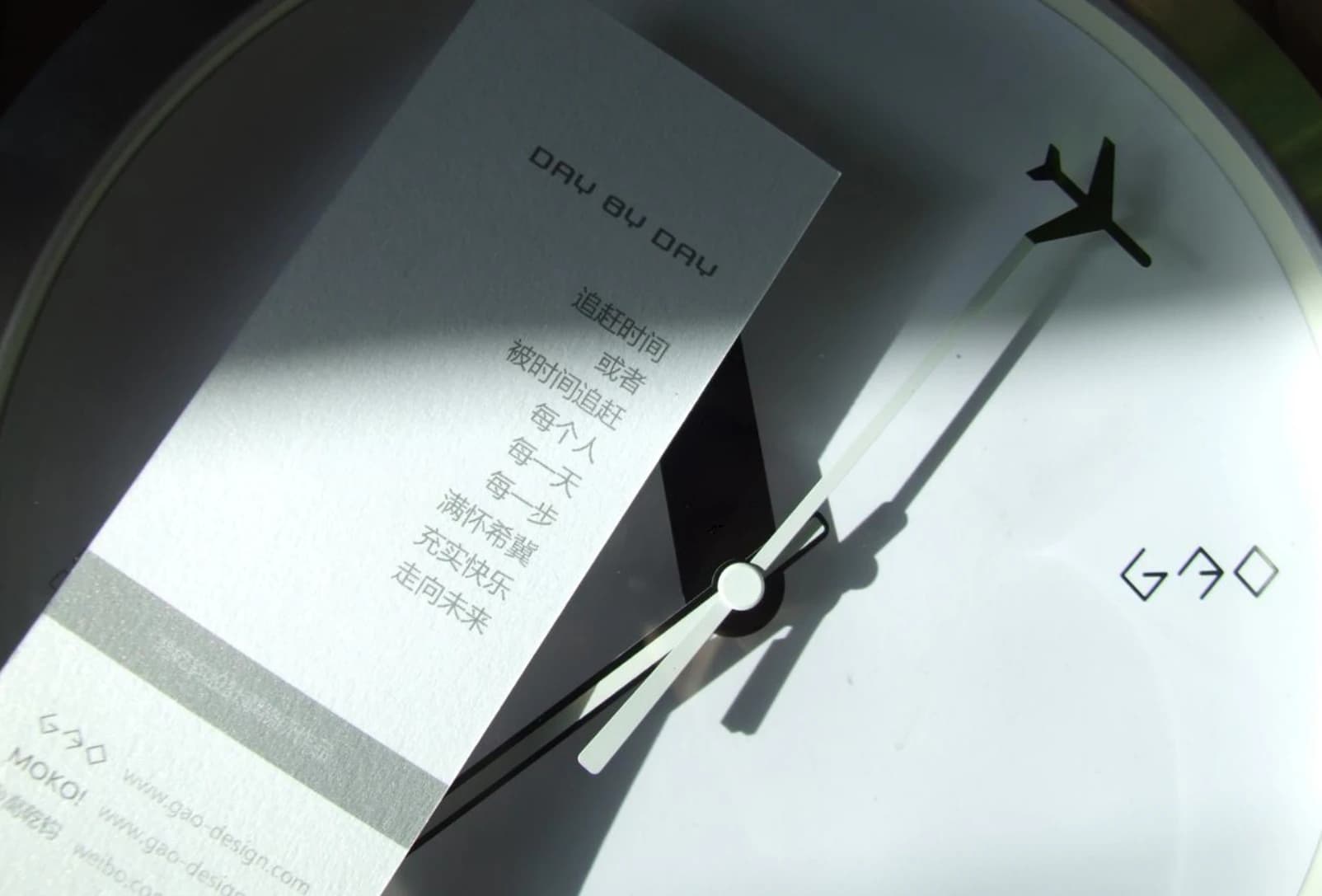
Day By Day begins with an ordinary action: glancing at the time. Instead of treating the clock face as a field of marks, the design turns the traveler on the hour hand into a small journey in progress. Walking, driving, and flying motifs move with time, so each glance carries a reminder to move through the day with intention.
I developed this metaphor into a complete home product: beyond the clock face hierarchy, metal rim, and hand details, the work extends to the brand mark, contextual photography, packaging, and instruction materials so the idea can be understood, used, and naturally placed in a home.
01 / TIME NARRATIVE
Make abstract time feel like daily movement
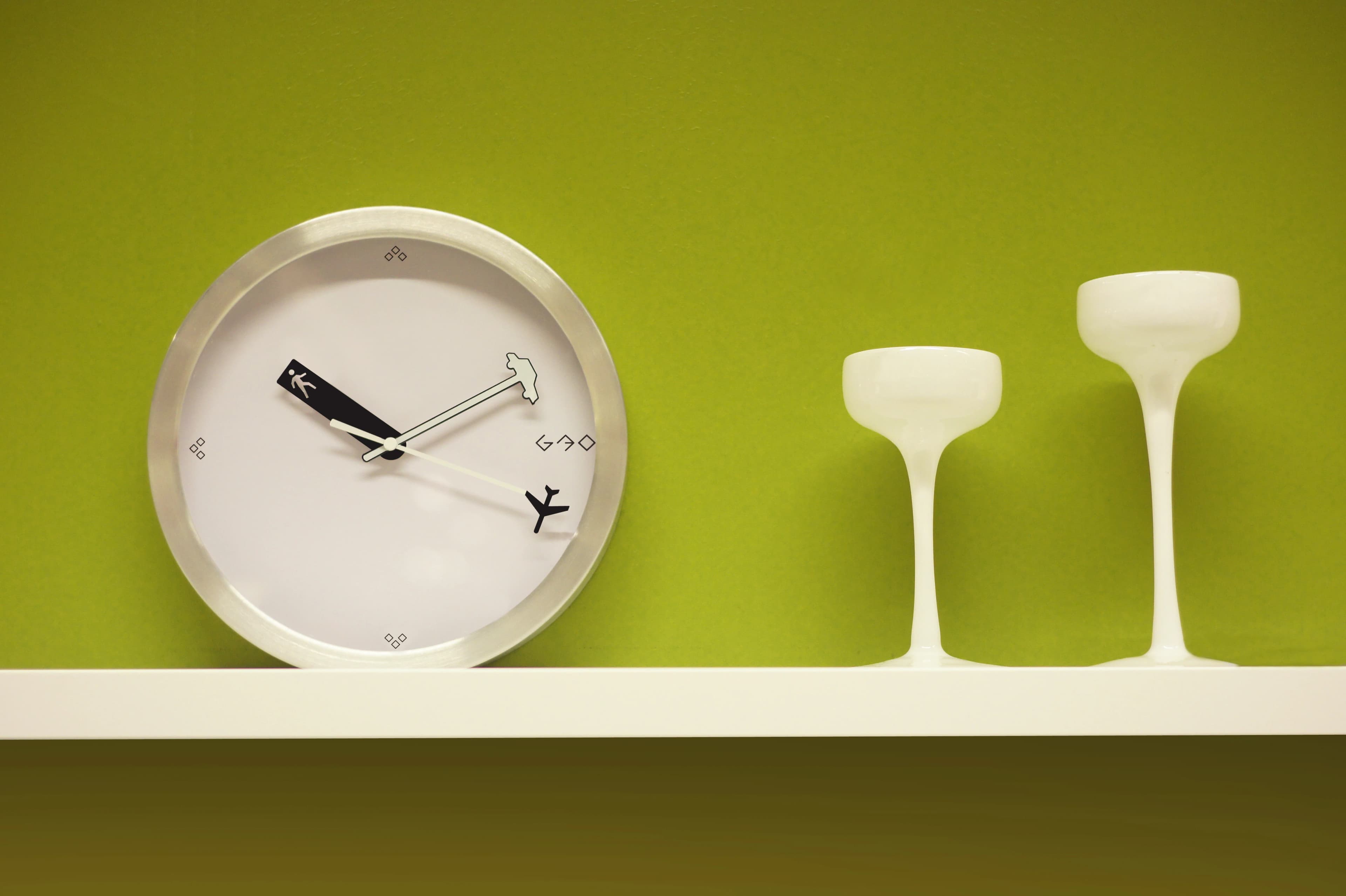
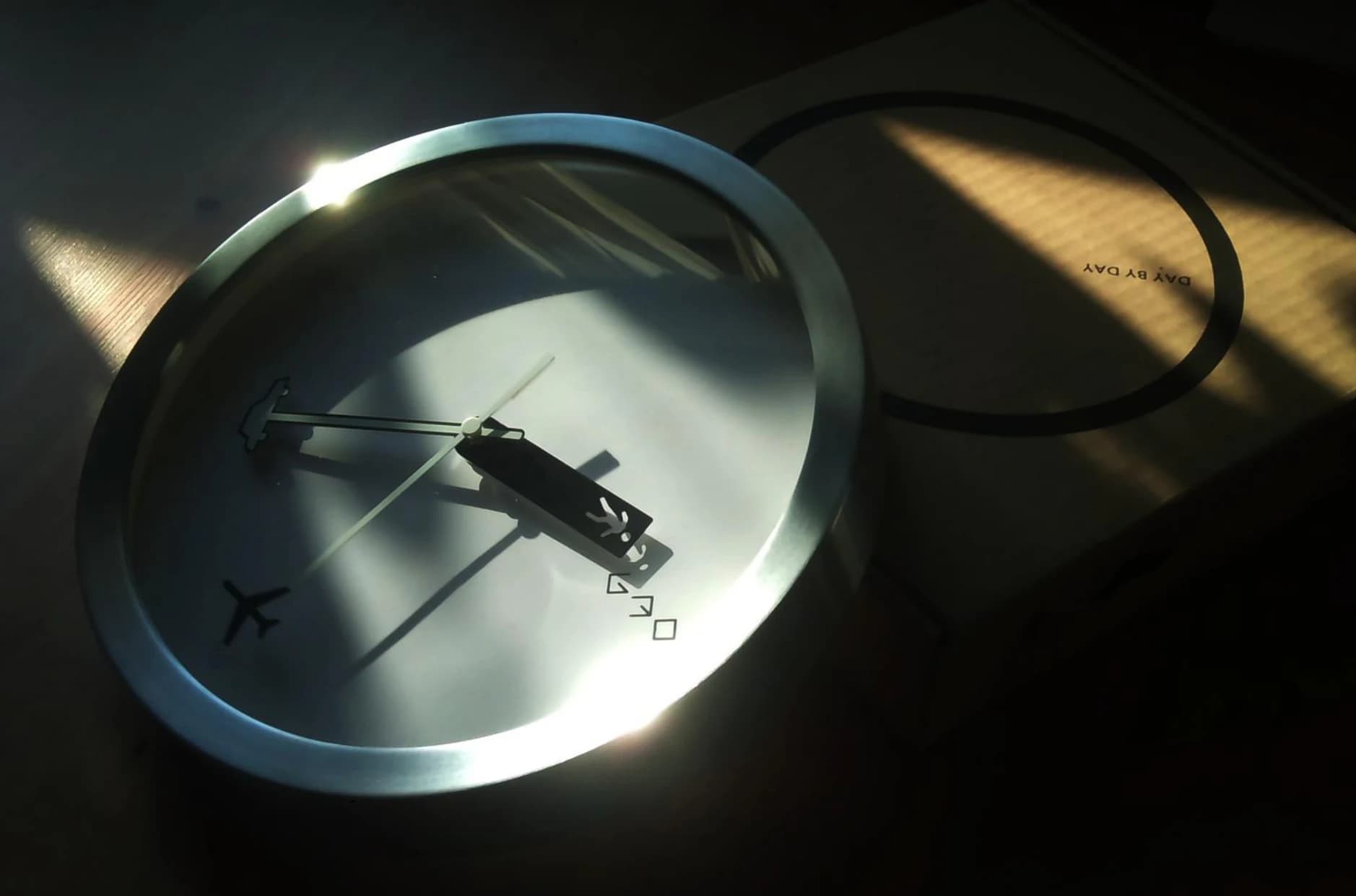
A conventional wall clock prioritizes accurate reading. Day By Day adds a narrative without giving that up. The hour hand is no longer only a line pointing to a mark; it carries travelers, vehicles, and aircraft. The passage of time becomes a visible prompt about daily progress, while the open face keeps time-reading as the first priority.
02 / IDENTITY SYSTEM
Use a minimal system to fix the product in memory
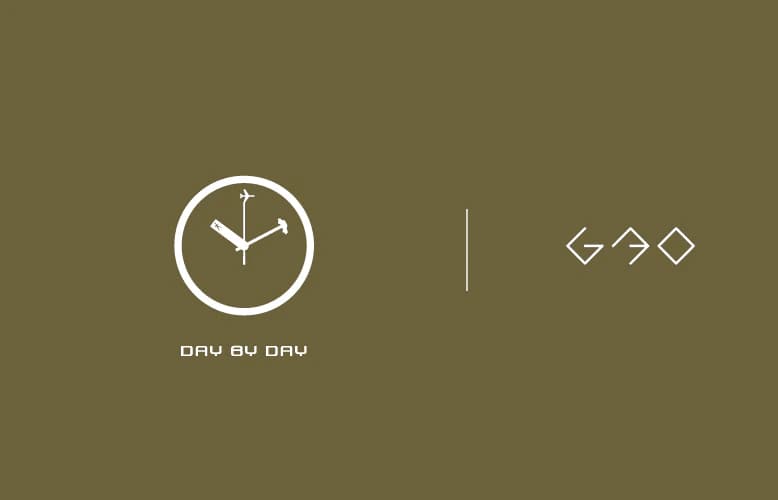
The identity takes the circular clock outline and three hands as its structure, compressing time and movement into a spare visual mark. It is not an added decoration but the starting point for the product language: face, packaging, instruction materials, and photography all share the same restrained, bright expression.
03 / PRODUCT EXPERIENCE
Let the narrative support reading time, not interrupt it
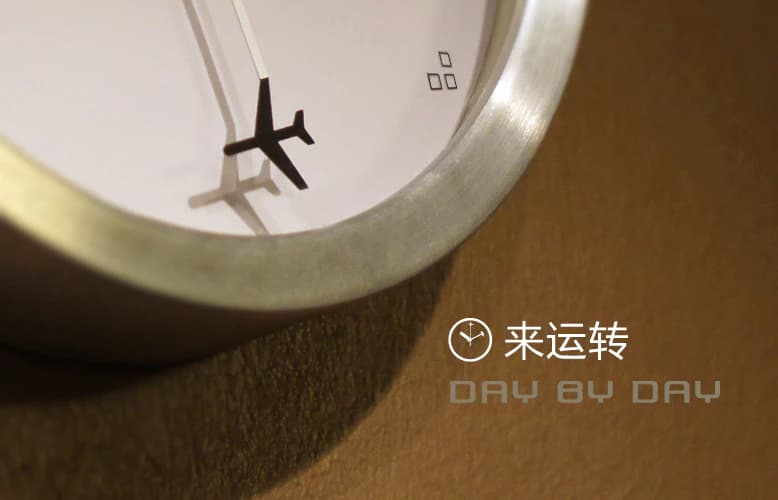
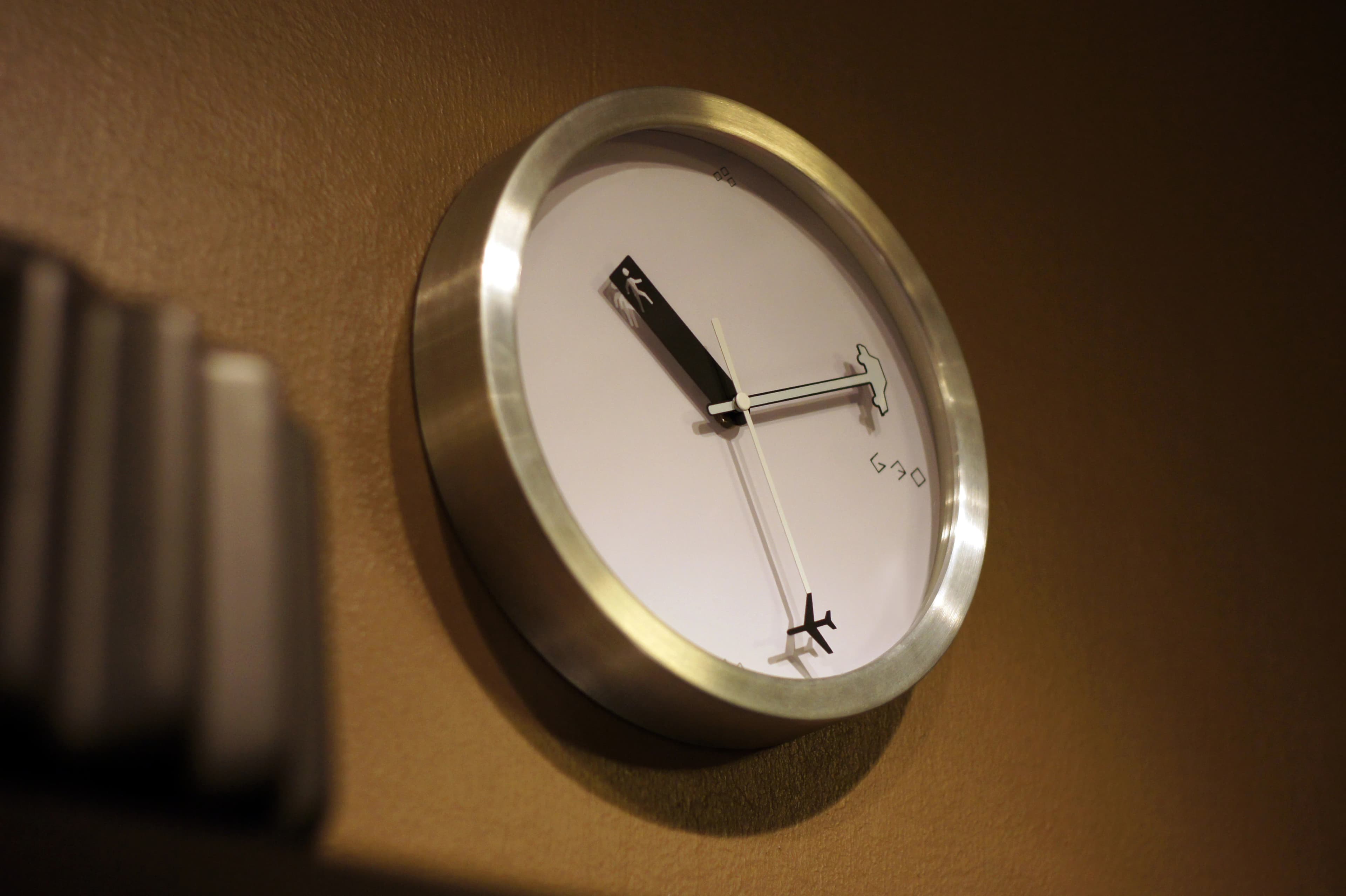
The white face creates a clear reading ground, and the metal rim gives the object presence in a home. Travel motifs stay within the hands and small symbols, appearing only when someone moves closer or lingers. The key tradeoff was simple: it must first be a readable clock, then a story object waiting to be discovered.
04 / HOME CONTEXT
Design for different viewing distances at home
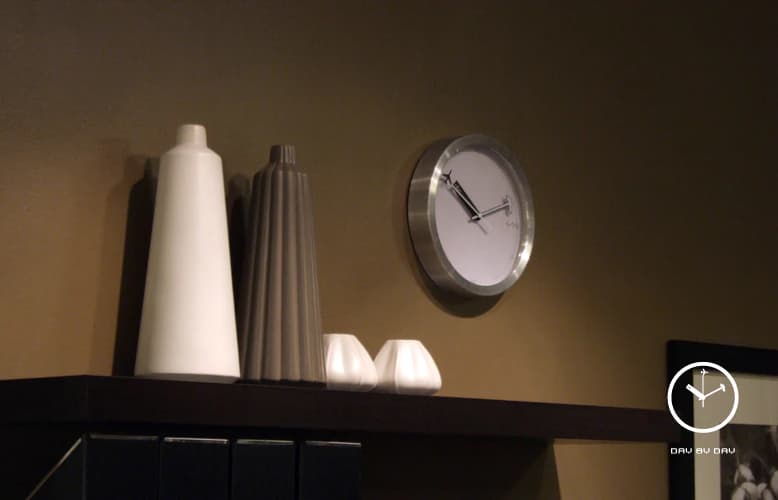
A wall clock needs to work across rooms. From a distance, its time and silhouette should be clear; up close, the hand details can emerge. On a bookcase, sideboard, or living-room wall, it also has to coexist with different materials, light, and display density. Multiple context views test that relationship rather than pursuing one studio angle.

05 / PRODUCT DELIVERY
From one clock to an experience that can be taken home
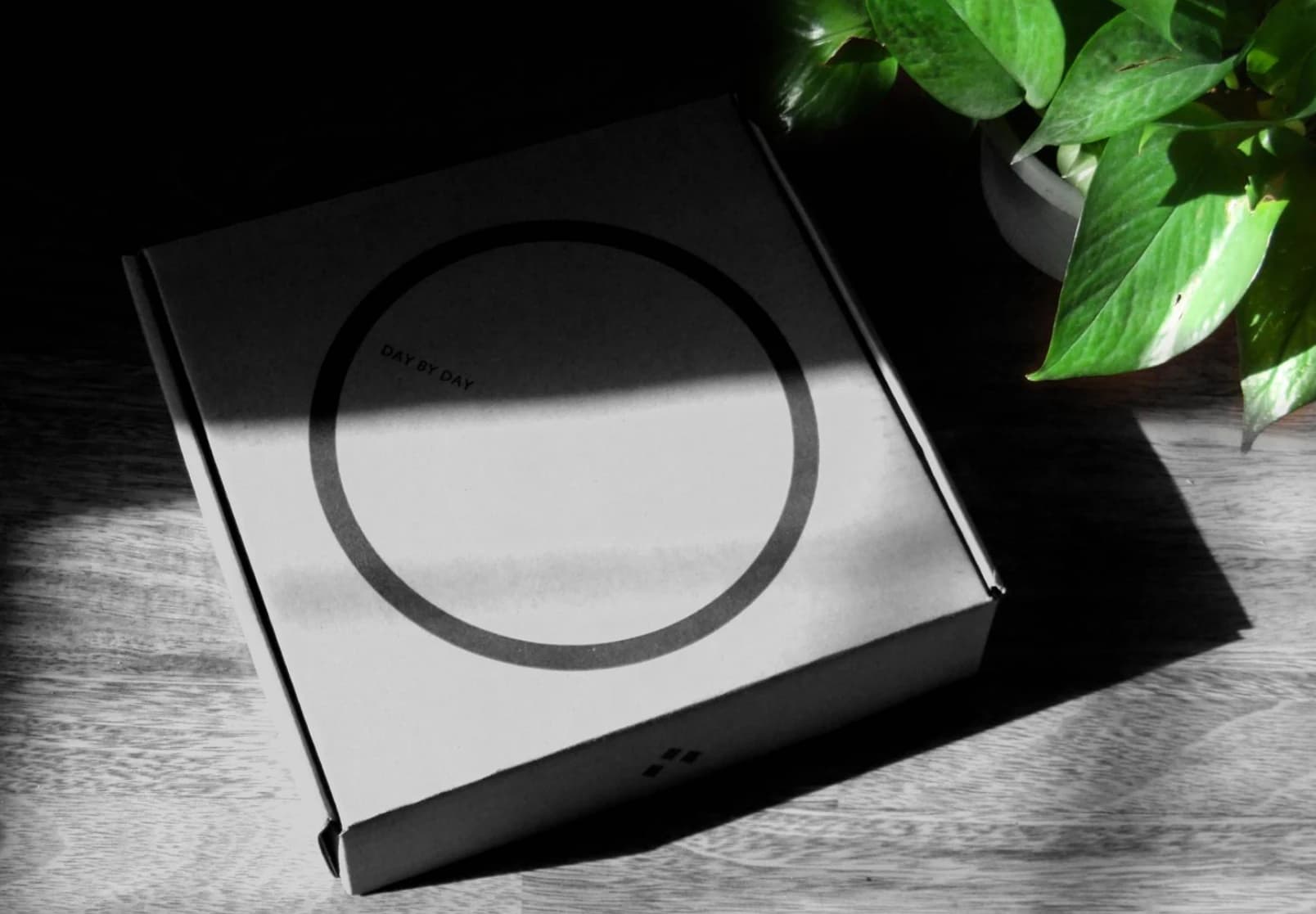
The packaging extends the circular clock language into the unboxing moment, while instruction materials organize installation, use, and product information into an approachable guide. The final in-use view completes the picture: for a home object, design does not end at form approval. It also includes delivery, understanding, and placement.

06 / DESIGN METHOD
Design principles
Day By Day shows how a familiar tool can create a new everyday perception:
- Find narrative in a functional action, so the hand movement itself becomes part of the concept
- Control information hierarchy: time-reading is fundamental, while the travel motif is a second layer to discover
- Treat product, packaging, and instructions as one experience path rather than separate deliverables
Next Case
Yun→