
Industry
Industrial Design / IP Merchandise
Role
Industrial Designer
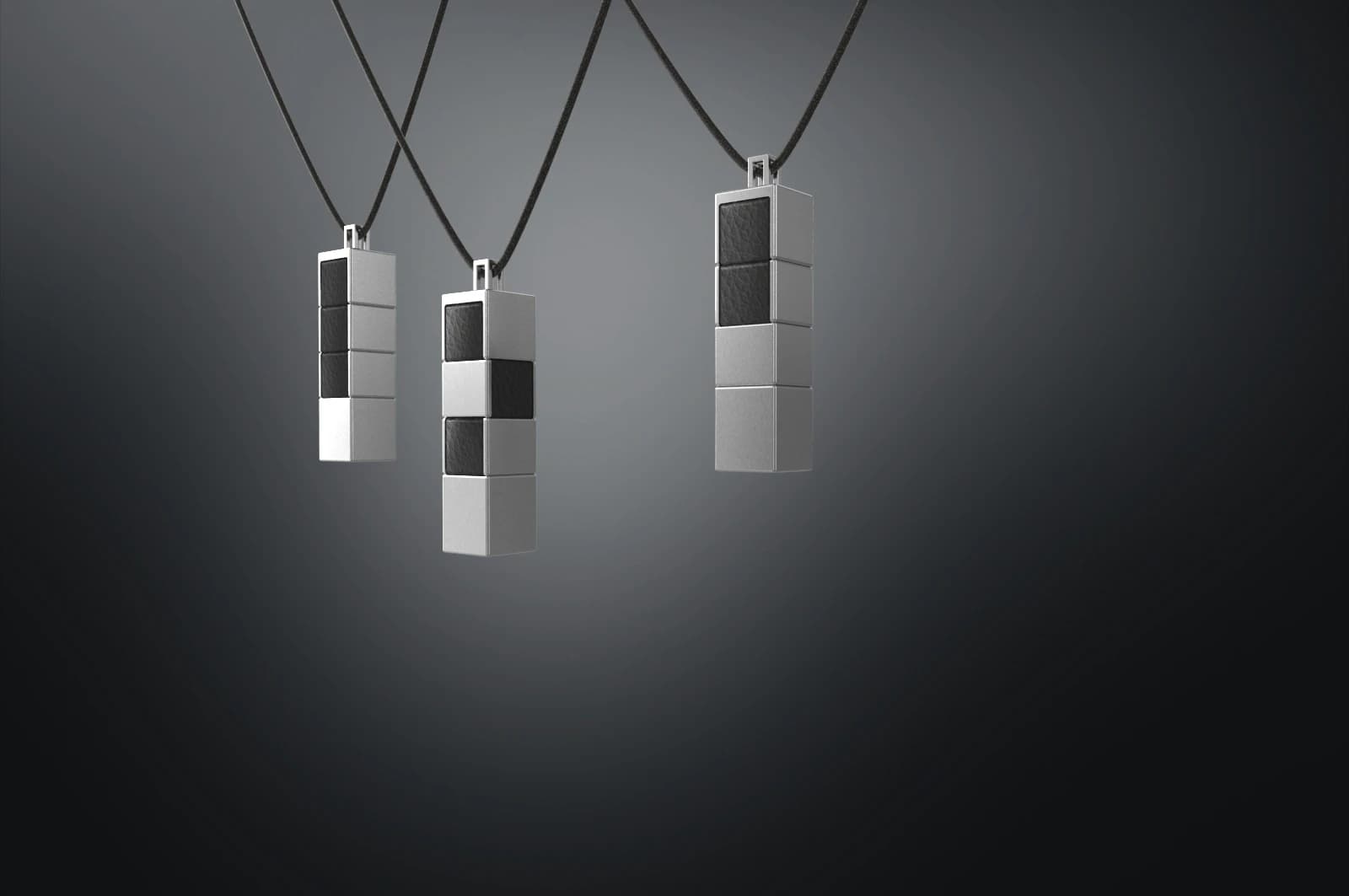
TABLETOP MECHANIC TRANSLATION
Turn an identity card into a wearable object
This jewelry merchandise starts with one of the most recognizable objects in the Sanguosha tabletop game: the identity card. The goal was not to place game graphics on a piece of jewelry, but to extract a player-facing mechanism. Identity can be recognized, rotated, concealed, and revealed again.
I translated that flat game token into a wearable rotating pendant, moving through sketches, 3D form studies, dimensional development, and physical prototypes to connect a game symbol with an everyday object.
01 / EXTRACT THE MECHANISM
Extract a wearable interaction from the game
In the game, the identity card carries role, faction, and asymmetric information. Its value is not simply a text icon; it is the sense of changing identity created through turning and display. Early sketches considered necklaces, rings, and bracelets before converging on a pendant structure that could best preserve the rotating identity-card characteristic.
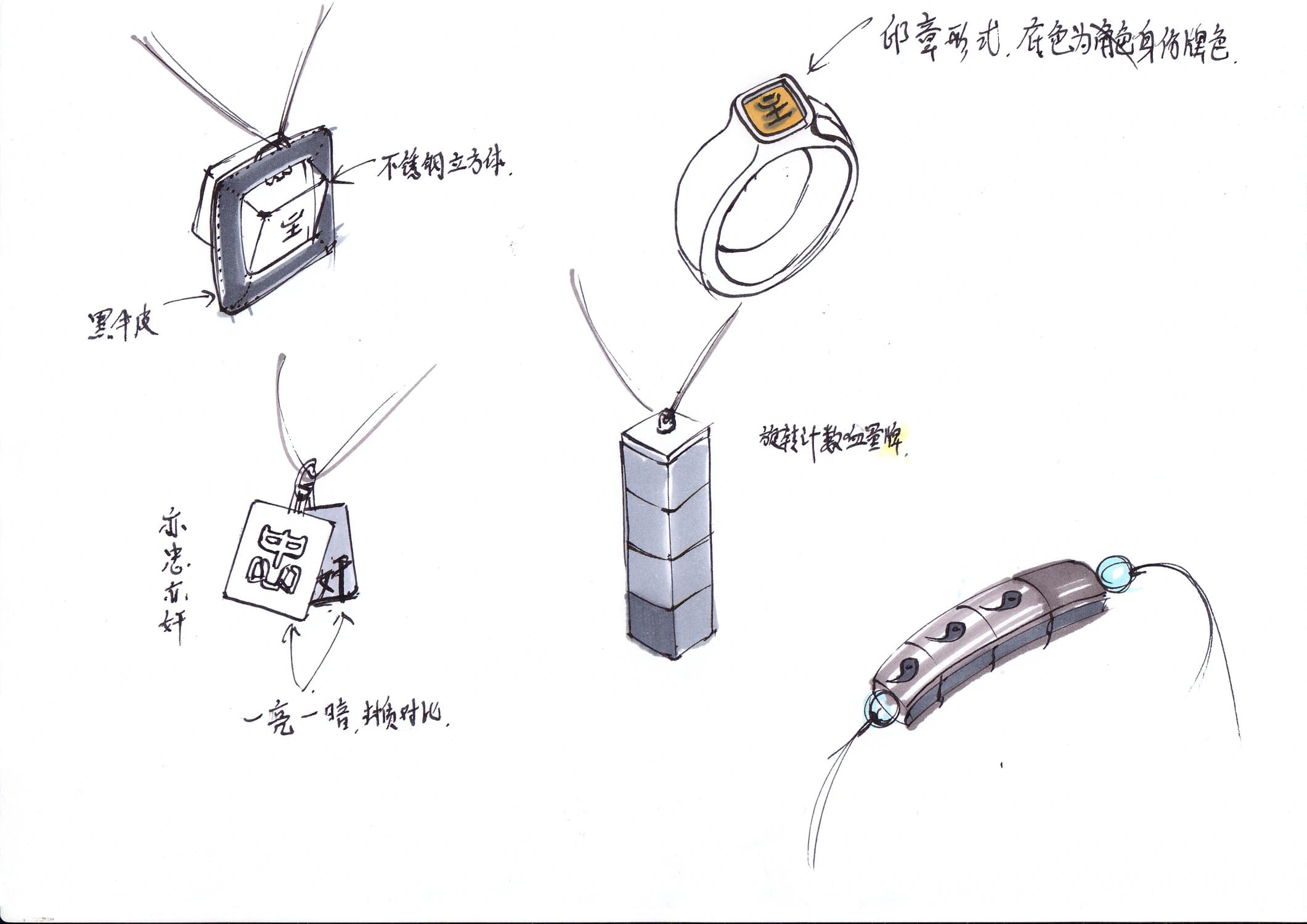
02 / TRANSLATE THE FORM
Make an identity card into a wearable object
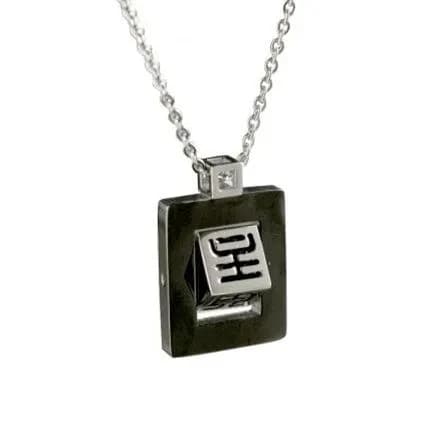
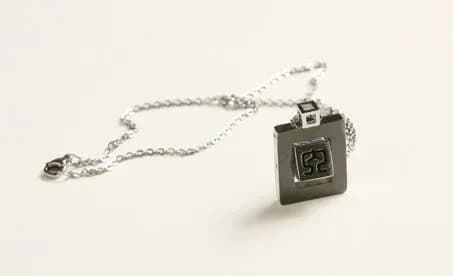
An outer frame keeps the identity symbol at the visual center, while the inner card becomes a contained rotating component. Vertical proportion, segmented massing, and the suspension method all support stable wear and readable form, giving a flat tabletop card the thickness, center of gravity, and tactility expected from jewelry.
03 / RESOLVE THE STRUCTURE
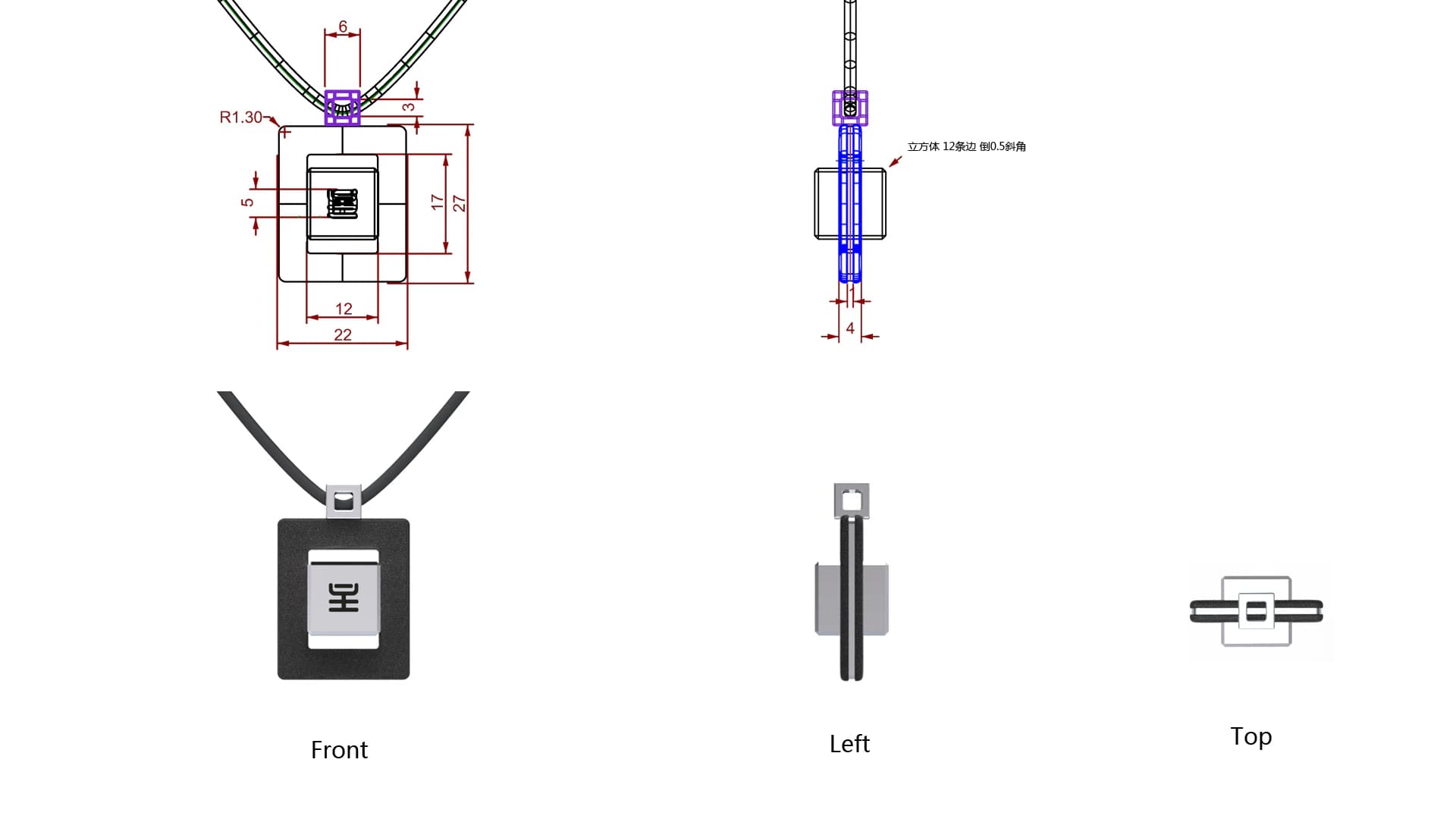
Resolve the interactive idea through dimension and structure
The dimensional drawing turns the visual concept into relationships between the pendant body, rotating card, connector, and thickness. At this scale, structure is not a post-design detail: whether the card can be turned by hand, hangs comfortably, and remains legible determines whether the tabletop mechanism survives in actual wear.
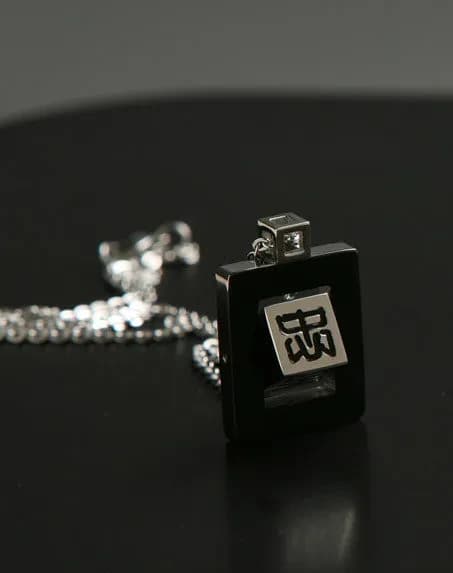
04 / PRESENT THE PROTOTYPE
Use prototypes to validate symbol, material, and presentation
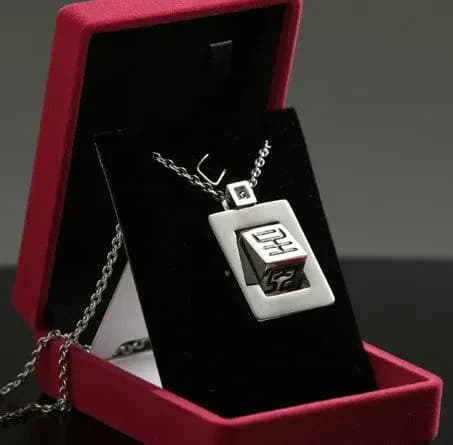
The physical prototype retains a dark frame, metal identity card, and a clear character for the lord role. Product, studio, and box presentations test its two readings at once: it needs to read as an identity card at close range, while keeping a clean silhouette when worn or displayed as licensed merchandise.
05 / DESIGN METHOD
Design principles
The project moves tabletop merchandise beyond graphic replication by translating mechanics into an object experience:
- Extract the game mechanism players actually perceive before deciding which visual symbols to retain
- Use an operable structure to carry the tabletop experience of turning, showing, and identifying a role
- Validate continuously through sketches, modeling, dimensions, and prototypes so the concept works at wearable scale
Next Case
Mushroom Jewelry→